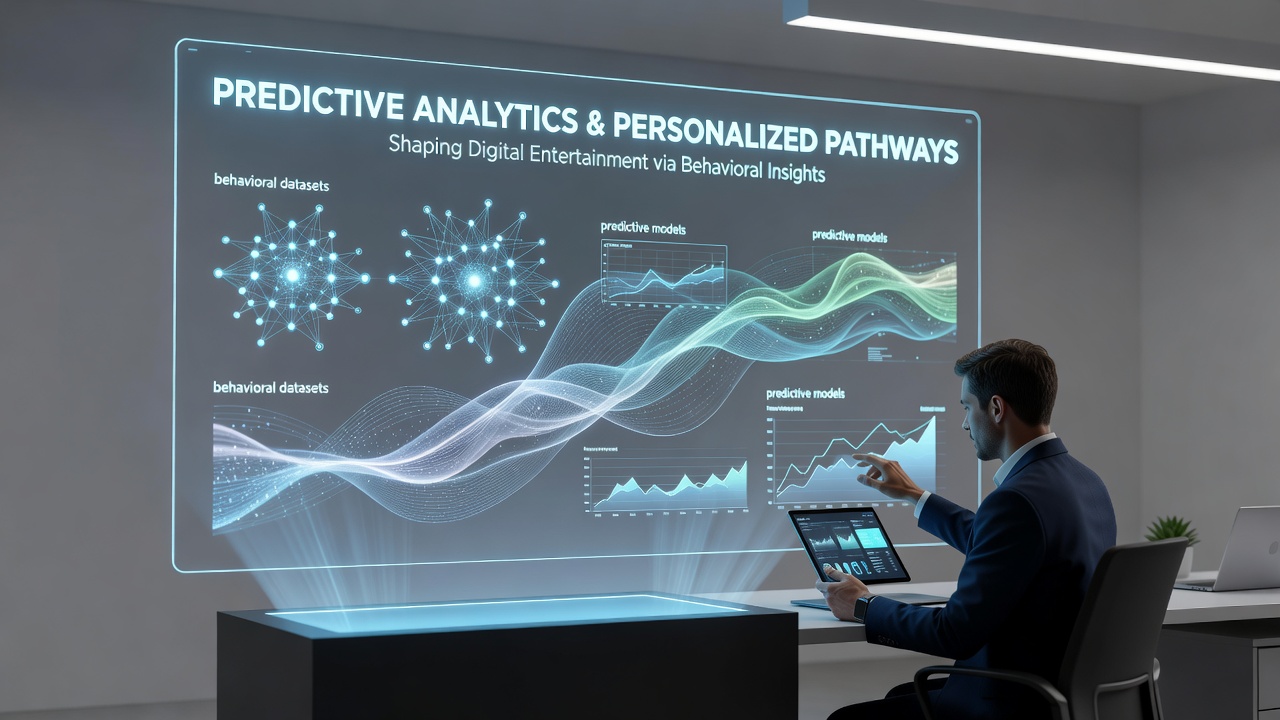
Predictive Analytics Applications in Shaping Personalized Pathways Through Digital Entertainment Platforms Based on Behavioral Datasets
Digital entertainment platforms have integrated predictive analytics into their core operations, drawing from extensive behavioral datasets that capture user interactions, viewing durations, search patterns, and engagement metrics across devices. These systems process information in real time, allowing platforms to generate individualized content pathways that align with observed habits rather than generic categories. Researchers at institutions tracking digital consumption note that datasets often include timestamps, device types, and navigation sequences, which together form the foundation for models predicting future preferences.
Behavioral data collection occurs through multiple channels, including in-app tracking, account histories, and cross-device synchronization. Platforms compile these inputs into structured profiles that feed machine learning algorithms designed to forecast content selection. In July 2026, updates to data handling protocols across major services reflected increased emphasis on consent mechanisms, driven by evolving standards from bodies like the European Commission on data governance. Such frameworks require platforms to maintain transparency about how behavioral signals influence recommendations while still enabling the granularity needed for accurate predictions.
Core Mechanisms Behind Personalization Models
Algorithms analyze sequences of past choices to identify clusters of similar users, then project likely next actions based on those groupings. Collaborative filtering techniques compare one individual's trajectory against aggregated patterns from millions of others, while content-based methods examine metadata attributes such as genre tags or narrative elements. Hybrid approaches combine both, refining outputs through continuous feedback loops where actual selections either reinforce or adjust the predictive weights. Observers have documented how these models adapt within minutes of new interactions, creating pathways that evolve dynamically rather than remaining static across sessions.
Platforms apply these predictions to reorder homepages, suggest playlists, and even adjust interface layouts. A user who frequently pauses documentaries midway through might receive shorter-form alternatives or supplemental explanatory segments, whereas someone who completes action series in single sittings could encounter extended episode queues. Data from industry reports indicates that such adjustments correlate with measurable shifts in session lengths, though exact figures vary by region and platform maturity.
Applications Across Video, Audio, and Interactive Formats
Video streaming services utilize predictive systems to sequence episodes and curate discovery rows that reflect inferred mood or pacing preferences. Audio platforms extend similar logic to podcast recommendations and music sequencing, incorporating skip rates and repeat listens as key signals. Interactive entertainment, including narrative-driven games and virtual environments, employs behavioral datasets to branch storylines or difficulty levels in response to detected player tendencies. One study from the MIT Media Lab examined how retention metrics improved when pathways incorporated real-time adjustments derived from session telemetry.

Cross-platform continuity represents another layer, where datasets merge mobile and desktop interactions to maintain consistent personalization regardless of access point. This integration allows a viewer who begins a series on one device to receive tailored continuation prompts on another. Regulatory guidance from the Australian Competition and Consumer Commission has highlighted the need for clear disclosures around such merged datasets, ensuring users understand the scope of behavioral tracking involved.
Impact on Engagement Metrics and Platform Operations
Platforms report that predictive personalization influences completion rates, subscription renewals, and content discovery breadth. Figures compiled by the OECD in its digital economy assessments show consistent patterns where algorithmically guided pathways increase time spent within applications compared to unpersonalized baselines. Yet the same datasets also surface edge cases, such as users whose behavior deviates from established clusters, prompting platforms to maintain fallback recommendation strategies.
Operational teams monitor model performance through A/B testing frameworks that isolate the effects of specific predictive features. Adjustments occur when drift appears in accuracy scores, often triggered by seasonal shifts in viewing habits or the introduction of new content libraries. Those who oversee these systems emphasize the iterative nature of refinement, where each dataset update recalibrates projections without requiring full model retraining.
Regulatory and Technical Considerations
Data privacy regulations across jurisdictions shape how behavioral datasets can be utilized. Requirements for anonymization, retention limits, and user access rights influence the scale and velocity of analytics pipelines. Platforms operating internationally navigate differing standards, often segmenting data processing geographically to remain compliant. Academic reviews of these practices note that technical safeguards such as differential privacy and federated learning are increasingly deployed to balance predictive power with protection obligations.
Technical infrastructure supporting these applications includes distributed computing resources capable of handling high-volume streams and edge processing nodes that reduce latency for real-time adjustments. Security protocols protect the underlying datasets, while governance policies dictate internal access levels and audit trails.
Conclusion
Predictive analytics continues to define how digital entertainment platforms translate behavioral datasets into individualized pathways, with ongoing developments in algorithm design and regulatory alignment shaping future implementations. The integration of these tools reflects broader trends in data-driven decision making across consumer technology sectors, supported by evidence from multiple research and oversight organizations. As datasets grow in complexity, the precision of personalization models evolves accordingly, maintaining focus on observable patterns rather than speculative assumptions.