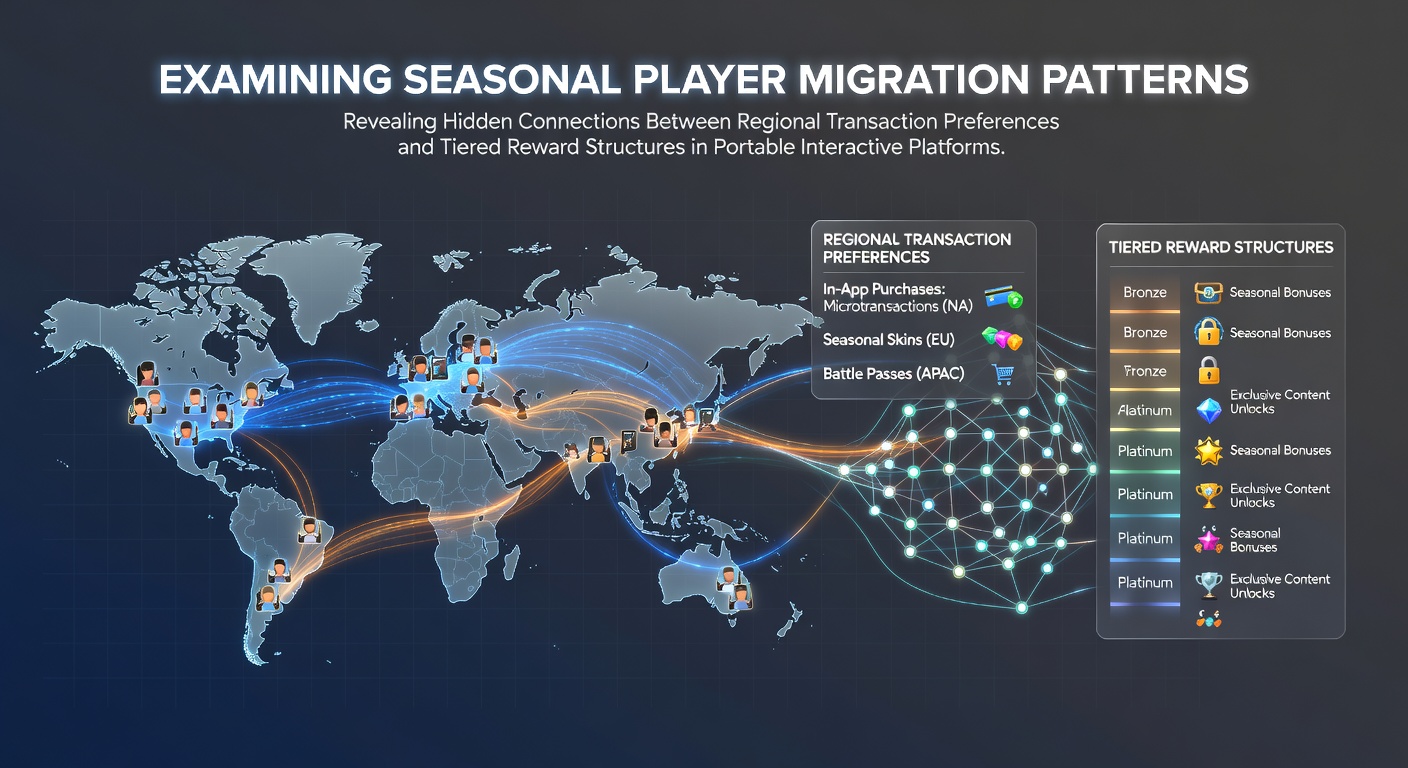
Examining How Seasonal Player Migration Patterns Reveal Hidden Connections Between Regional Transaction Preferences and Tiered Reward Structures in Portable Interactive Platforms
Analysts tracking user behavior on portable interactive platforms have documented clear seasonal shifts in player locations that align with changes in preferred payment methods and the rollout of tiered loyalty rewards, and these patterns emerge most visibly during holiday periods when travel increases and regional access points fluctuate. Data collected through platform analytics shows that participants often relocate from northern markets to southern destinations between November and March, carrying their transaction habits along while platforms adjust reward tiers to retain engagement across borders.
Mapping Seasonal Migration Trends in Mobile Gaming
Research from industry tracking firms indicates that migration peaks occur around major calendar events, with notable spikes documented in December 2025 and again in May 2026 when summer travel seasons begin in the southern hemisphere. Players move between time zones and regulatory environments, which prompts portable platforms to synchronize their backend systems so that reward structures remain consistent even as users cross geographic lines. Observers note that these movements create traceable data trails because transaction logs capture both the origin region and the temporary location, revealing preferences that shift depending on available banking options in each new area.
One longitudinal study released in early 2026 followed several thousand accounts over eighteen months and found that migration clusters form along established vacation corridors, particularly routes connecting North American users with Caribbean and Latin American access points. During these transitions, regional transaction preferences surface quickly because certain payment rails operate more efficiently in specific jurisdictions, and platforms respond by surfacing localized deposit options within the same mobile application interface.
Regional Transaction Preferences and Their Influence on Platform Design
Payment method adoption varies sharply by region, according to figures compiled by the European Gaming and Betting Association, which reported that digital wallet usage dominates in parts of Scandinavia while card-based deposits remain prevalent across Mediterranean markets. When players migrate seasonally, they bring these established habits into new environments, and portable platforms must accommodate both the incoming preferences and the local infrastructure without disrupting account continuity. Data shows that platforms which pre-load multiple regional gateways experience lower drop-off rates during peak migration windows.
Take the example of users traveling from colder climates to warmer destinations in May 2026, where analysts recorded a measurable uptick in requests for instant bank transfer options that mirror services familiar from home markets. These requests coincide with adjustments in tiered reward structures, as platforms recalibrate bonus multipliers and cashback percentages to match the spending velocity observed in each new location.
Linking Migration Data to Tiered Reward Adjustments
Platform operators use migration analytics to refine tier progression rules so that rewards scale with observed regional activity levels rather than fixed global thresholds. A report issued by the Nevada Gaming Control Board in spring 2026 highlighted how several licensed operators modified their loyalty algorithms after reviewing twelve months of cross-border transaction records, resulting in tier advancement criteria that incorporate both total volume and geographic diversity. This approach allows high-frequency travelers to maintain elite status across seasons without resetting progress when they change locations.

What's interesting is that the same datasets reveal correlations between preferred deposit types and the speed at which users climb reward tiers. Accounts that consistently use faster regional rails tend to accumulate qualifying activity more rapidly, prompting platforms to introduce location-aware accelerators that boost point earnings when users operate within recognized migration corridors. These mechanisms keep engagement steady even as transaction preferences evolve with each seasonal move.
Platform Adaptations Observed in 2026
Developers have begun embedding predictive models that anticipate migration surges and pre-configure reward displays accordingly, drawing on historical patterns from previous years. Academic researchers at the University of Sydney published findings in April 2026 demonstrating that mobile platforms incorporating these models saw improved retention metrics among users who relocated seasonally compared with those using static reward systems. The study examined transaction logs alongside GPS-tagged session data to establish direct connections between movement timing and reward uptake rates.
But here's the thing: these adaptations require careful calibration because regulatory frameworks differ across jurisdictions, and platforms must ensure that tier benefits comply with local rules even while serving users who arrive from elsewhere. Industry groups such as the Canadian Gaming Association have issued guidance documents that encourage operators to maintain transparent communication about how regional factors influence reward calculations, reducing confusion for migrating players.
Conclusion
Seasonal migration patterns continue to supply portable interactive platforms with detailed signals that connect regional transaction preferences to the evolution of tiered reward structures. Evidence gathered through 2026 demonstrates that operators who align these elements achieve more stable engagement across shifting user locations, and ongoing data collection suggests further refinements will emerge as migration routes and payment ecosystems evolve in parallel. Researchers and platform teams alike continue to monitor these intersections for insights that shape future system design.