Connecting Verification Timelines to Promotion Uptake Rates across Portable Casino Applications
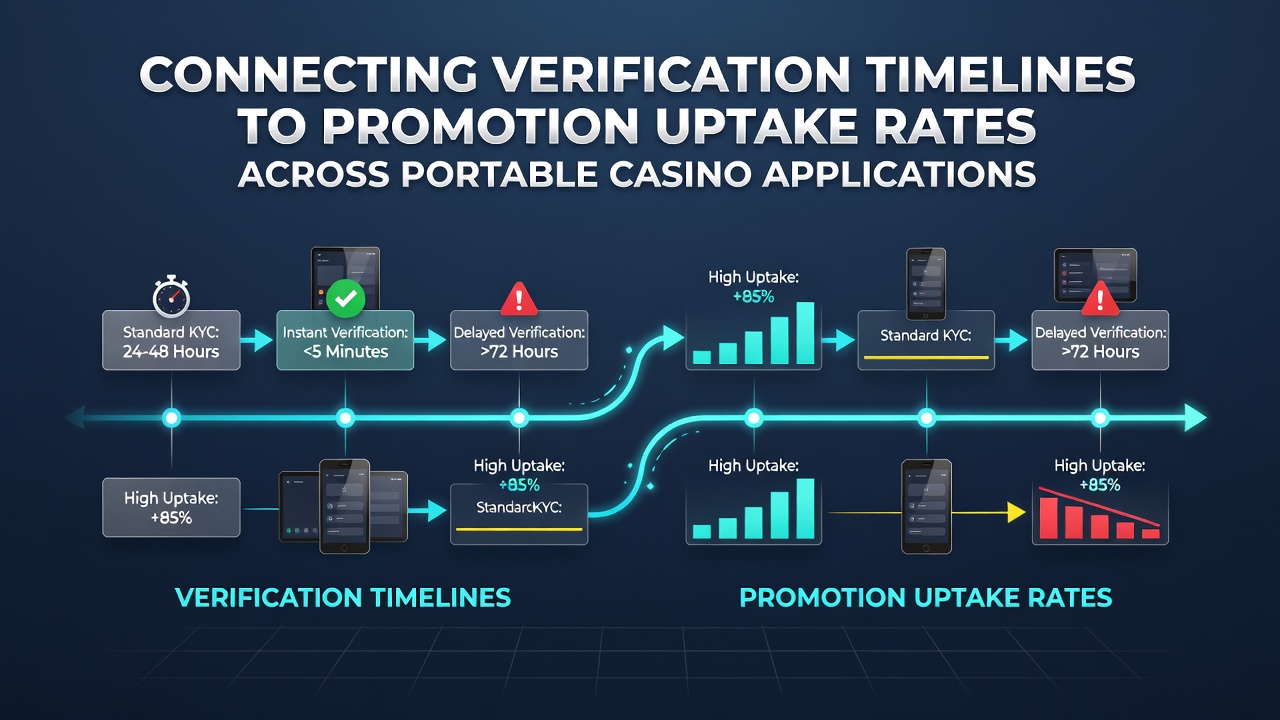
Portable casino applications have grown rapidly in recent years, and verification timelines now play a direct role in how quickly users claim available promotions, with several industry reports tracking these patterns through aggregated user data. Shorter verification windows tend to align with higher promotion acceptance, while extended checks often coincide with drop-offs in uptake, according to platform analytics compiled across multiple operators.
How Verification Procedures Operate in Mobile Environments
Verification in portable applications typically involves identity confirmation through document uploads, biometric checks, or third-party database cross-references, and these steps occur at different speeds depending on the chosen method and regional regulatory requirements. Operators integrate automated systems that complete basic checks within minutes when users submit clear images or link verified accounts, yet more thorough reviews involving manual oversight extend the process into hours or days. Data from multiple app stores shows that users who finish verification in under thirty minutes proceed to promotion pages at noticeably higher rates than those waiting longer.
Links Between Timelines and Promotion Acceptance
Promotion uptake rates climb when verification completes swiftly because users remain engaged with the app during their initial session, and they encounter bonus offers while motivation stays high. Extended timelines create friction points where players navigate away to other activities, reducing the likelihood they return specifically to claim a time-sensitive reward. Research compiled by academic groups tracking digital gambling behavior indicates that a delay beyond two hours correlates with a measurable decline in redemption activity, particularly for deposit-match bonuses that require immediate action.
Observers tracking user flows across devices note that push notifications sent immediately after verification approval help recapture attention, yet these reminders prove less effective when the original wait exceeded one full day. Portable platforms that display estimated verification times upfront report steadier progression from account creation to promotion engagement, since players adjust expectations and stay within the app environment.
Regional Patterns Emerging in Mid-2026
By June 2026 several markets displayed distinct correlations between verification speed and promotion response. In jurisdictions with streamlined digital identity systems, operators recorded faster average completion times alongside elevated bonus participation, whereas regions relying on paper-based or multi-step manual reviews showed slower uptake curves. Aggregated figures from platform dashboards reveal that apps serving North American users achieved verification-to-promotion conversion improvements after introducing optional instant verification layers powered by government ID databases.
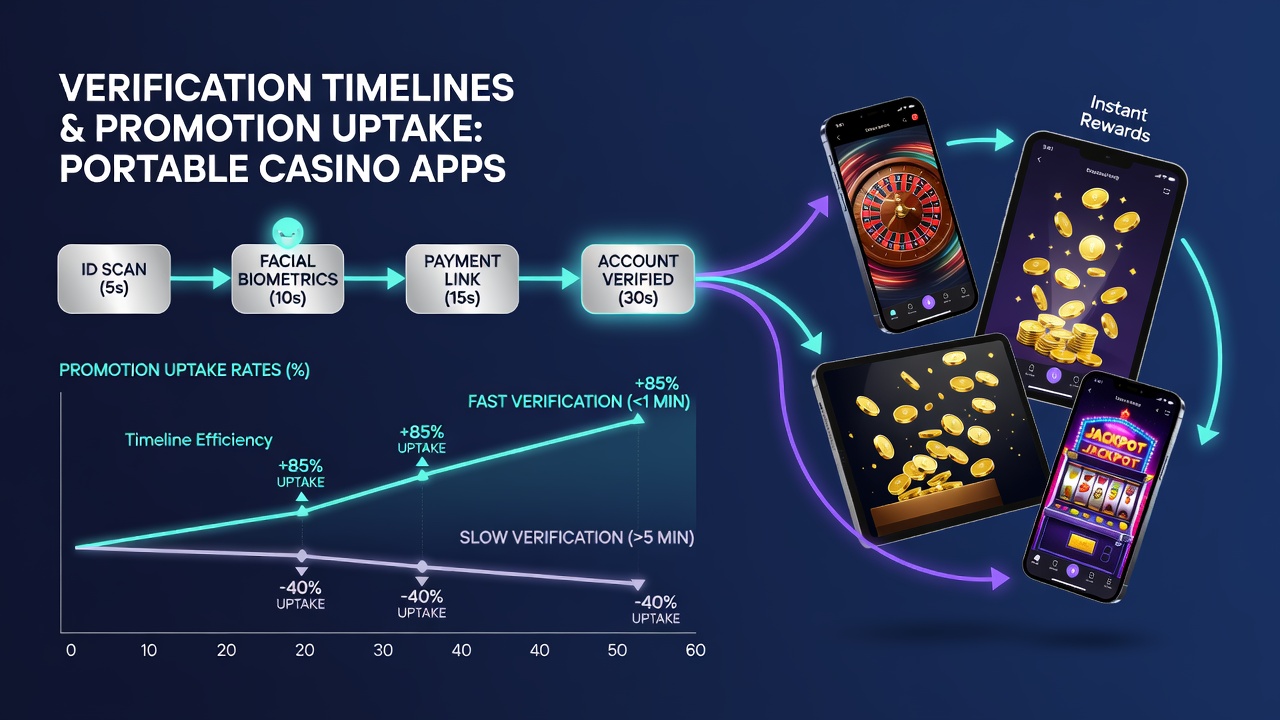
European operators adopting similar layered approaches documented parallel gains, with one analysis from the University of Gibraltar’s gambling studies unit highlighting that verification completed inside fifteen minutes lifted promotion engagement by measurable margins across tested cohorts. Meanwhile, operators in parts of Asia continued to balance stricter local compliance rules against user retention goals, resulting in varied timeline outcomes that still followed the same broad pattern of quicker checks supporting higher uptake.
Practical Adjustments Operators Have Implemented
Many development teams now prioritize verification optimization because internal metrics demonstrate clear downstream effects on promotion performance. They deploy machine-learning models that flag low-risk accounts for expedited processing while routing higher-risk submissions to deeper review queues, and this tiered method preserves compliance standards without uniformly slowing every user. A report prepared by the Canadian Centre for Addiction and Mental Health examined several mobile platforms and found that segmented verification reduced average wait times without increasing regulatory incidents.
Operators also surface progress indicators and estimated completion estimates within the app interface, giving users visibility that encourages them to remain active rather than abandon the flow. When combined with simplified document capture tools that work directly through device cameras, these features contribute to tighter connections between verification completion and subsequent promotion claims.
Conclusion
Verification timelines and promotion uptake rates in portable casino applications show consistent connections across available datasets, with faster processes supporting stronger engagement outcomes in multiple regions. Continued refinements in identity technology and workflow design allow operators to maintain regulatory standards while shortening delays that previously interrupted user momentum. As platforms collect additional longitudinal data through 2026 and beyond, these relationships will likely guide further adjustments aimed at aligning verification efficiency with promotion accessibility.