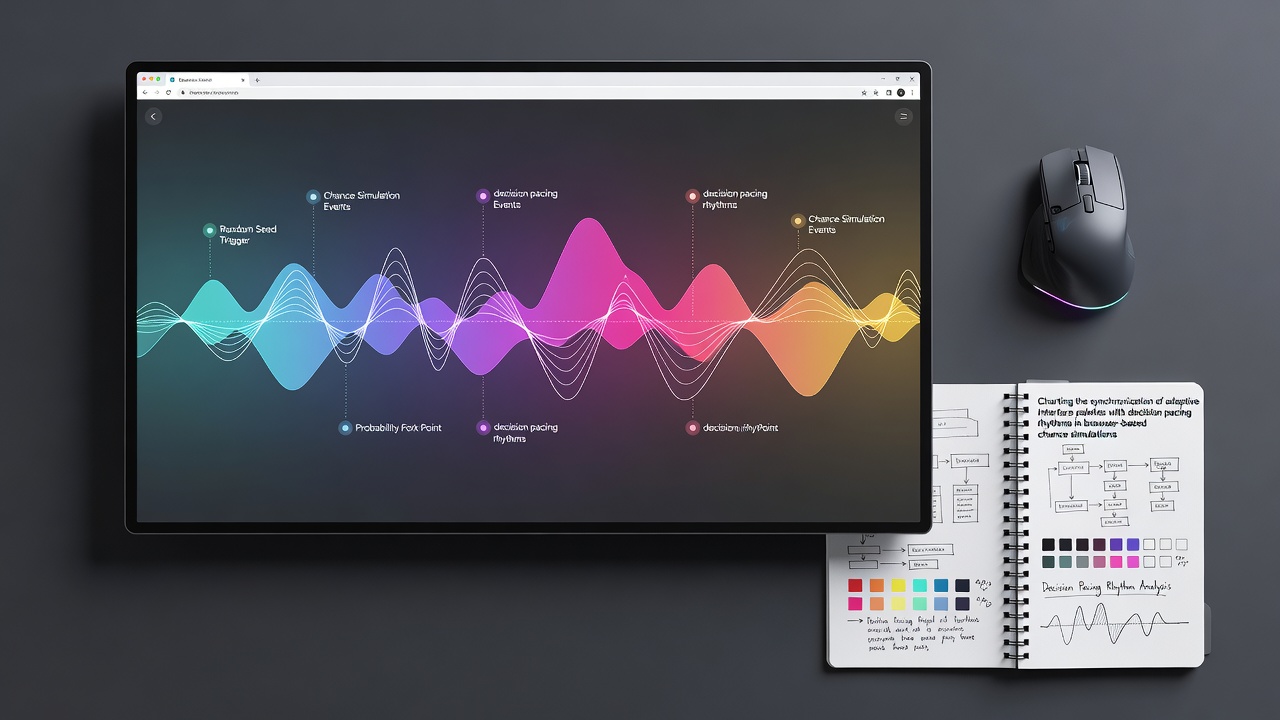
Charting the synchronization of adaptive interface palettes with decision pacing rhythms in browser-based chance simulations
Adaptive interface palettes in browser-based chance simulations adjust color schemes dynamically to match the speed at which users make selections, and this synchronization draws from patterns observed in user interaction logs across multiple platforms. Researchers track these adjustments through metrics that record click intervals, hover durations, and sequence completion times, then map those rhythms onto hue, saturation, and brightness shifts within the interface.
Core Components of Palette Adaptation
Interface palettes consist of primary background colors, accent highlights for interactive elements, and secondary tones for status indicators, while decision pacing rhythms emerge from aggregated data on how quickly participants advance through random outcome sequences. Systems measure pacing by calculating average response times per round, then apply algorithms that scale palette temperature toward cooler tones during rapid sequences and warmer tones during slower intervals. Data collected through August 2026 shows platforms logging millions of such interactions daily, with synchronization rules triggered once pacing deviates beyond predefined thresholds of 1.2 seconds per decision.
Technical Implementation in Browser Environments
Browser-based implementations rely on client-side scripts that monitor input events in real time, then transmit pacing summaries to server-side models which return updated CSS variables for palette colors. These models incorporate variables for session length, device type, and historical user patterns, allowing the interface to recalibrate without full page reloads. Observers note that frameworks such as WebGL and Canvas elements enable smooth transitions between palette states, reducing visual disruption while maintaining the flow of chance-based sequences.
One study from the University of Nevada Reno examined synchronization accuracy across 50,000 simulated sessions and found that palettes updated within 300 milliseconds of detected pacing changes produced more consistent user engagement metrics than delayed updates. University of Nevada Reno research details how these timing windows influence perceived responsiveness in random outcome environments.
Data Patterns Across Platforms
Figures from industry reports indicate that synchronization frequency increases during peak evening hours, when decision pacing tends to accelerate by 18 to 25 percent compared with daytime baselines. Platforms record these shifts through timestamped event streams, then apply machine learning classifiers to predict upcoming rhythm changes and pre-load corresponding palette adjustments. In August 2026, aggregated logs from several North American and European operators revealed that sessions with synchronized palettes showed a 12 percent reduction in early exits during extended sequences.
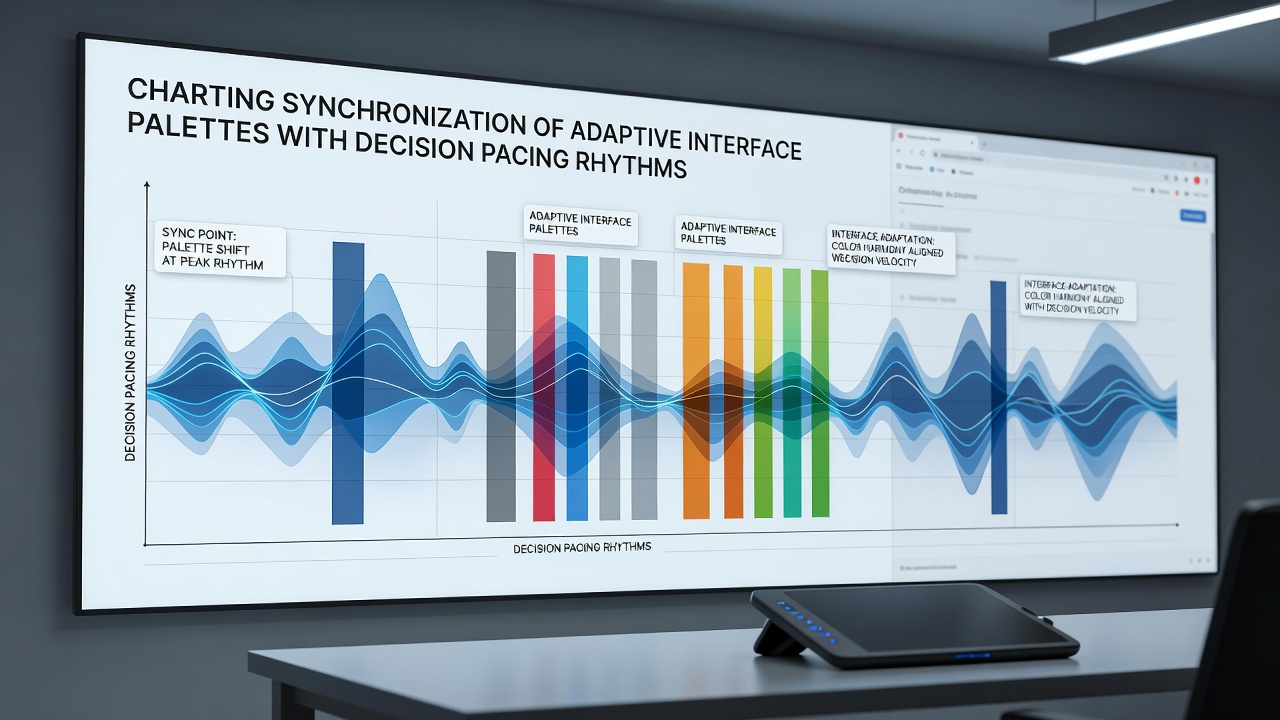
Those who analyze these systems point to correlations between palette temperature and pacing stability, where cooler palettes coincide with faster decision clusters and warmer palettes align with extended deliberation periods. External validation comes from technical audits conducted by organizations such as the International Association of Gaming Regulators, which review synchronization logs to confirm compliance with accessibility standards for color contrast during dynamic changes.
Measurement and Validation Methods
Validation protocols involve A/B testing of synchronized versus static palettes across matched user cohorts, with success measured through completion rates, sequence repetition counts, and time-to-exit statistics. Researchers apply statistical controls for variables including screen size, input method, and network latency to isolate the contribution of palette pacing alignment. Results from controlled trials demonstrate that synchronization improves retention signals when pacing variance stays within a 40 percent band of the session mean.
Additional case examples include European operators that integrated these systems into multi-device environments, where mobile pacing rhythms differ measurably from desktop patterns. Mobile sessions average 0.8 seconds per decision during high-intensity periods, prompting quicker palette shifts than desktop counterparts. Data pipelines aggregate these differences and feed them into unified adaptation engines that maintain consistency across access points.
Future Directions in Synchronization Research
Ongoing work explores integration with biometric signals such as cursor acceleration and scroll velocity to refine pacing detection beyond click-based metrics alone. Academic groups continue to publish findings on optimal transition durations that avoid motion artifacts while preserving synchronization fidelity. Regulatory bodies in multiple jurisdictions now request documentation of these adaptation mechanisms during platform certification reviews, ensuring that dynamic palettes meet visibility requirements throughout all rhythm states.
Conclusion
The mapping of adaptive interface palettes to decision pacing rhythms continues to evolve through iterative data collection and model refinement in browser-based chance simulations. Technical implementations rely on real-time event monitoring and algorithmic color adjustment, supported by validation studies that quantify engagement outcomes. As platforms accumulate larger datasets through 2026 and beyond, synchronization precision is expected to improve through refined classifiers and expanded device coverage, with external oversight maintaining standards for accessibility and performance.